

The Complete Guide to UGC Ads for Supplement Brands
How to plan, brief, produce and test creator-style video ads that feel real, respect the rules, and give Meta and TikTok genuinely different ads to work with.
Creator-style video is the default language of paid social for supplement brands. A person on a phone, in a real room, talking about a real routine. It works because it looks like the content people already choose to watch.
It is also the format most brands get wrong in the same way. They order ten testimonials, from similar creators, in similar bedrooms, reading similar scripts, and then wonder why the account behaves like it has one ad instead of ten.
This guide covers what UGC ads are, which formats suit supplements, how to choose between real creators, directed shoots and AI, how to brief so the output is actually varied, and how to test and read the results.
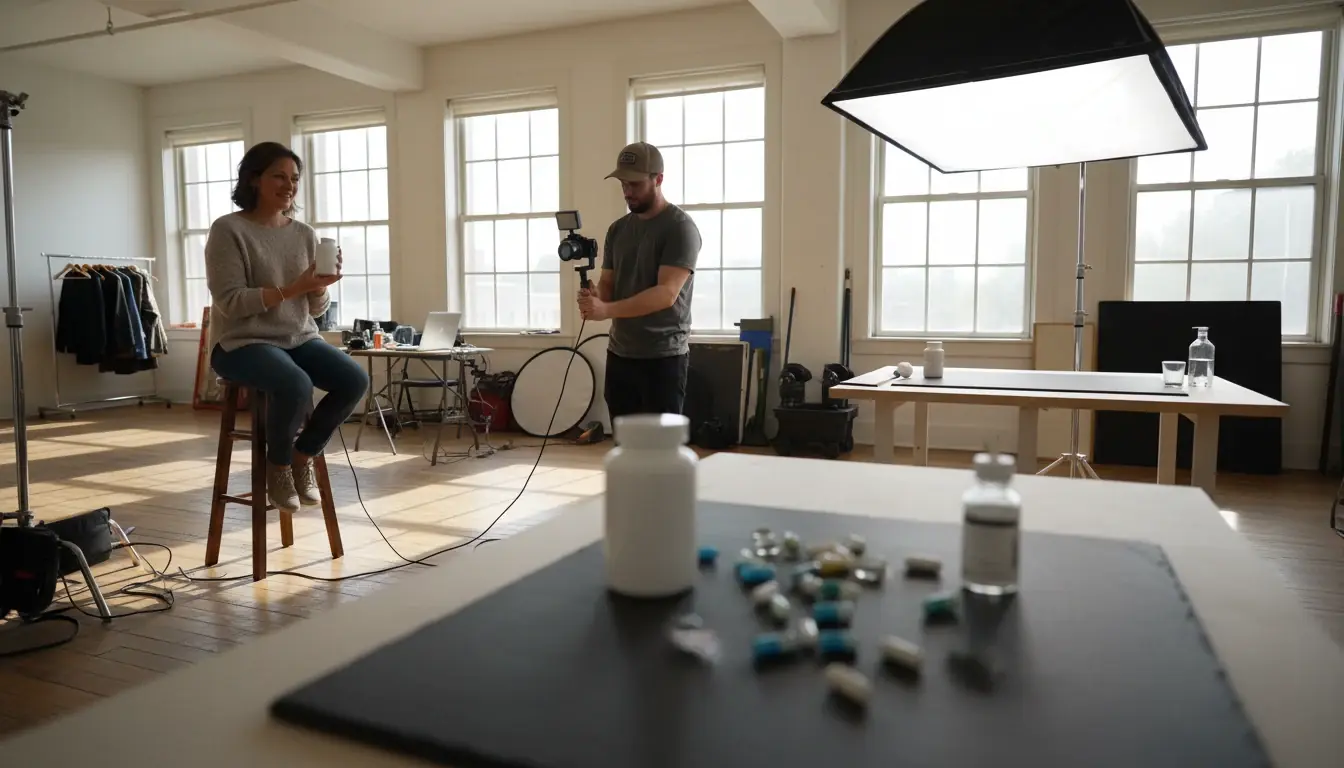
What UGC ads are (and what they are not)
UGC stands for user-generated content. In paid social it has come to mean something broader: any ad that looks and sounds like a real person made it, rather than a brand.
In practice there are three kinds:
- Organic UGC. Real customers post about your product on their own. You ask permission and license it for ads.
- Commissioned creator UGC. You pay a creator to film content in their own style, to a brief, for use in your ads.
- Directed UGC. A production team casts, directs and edits content that keeps the native, phone-first look but is planned shot by shot.
All three can work. What they share is the look: vertical, handheld or propped phone, natural light, direct address to camera, captions on screen, no studio polish. What UGC is not is a license to skip strategy. A creator ad still needs a clear audience, a single idea, a hook and a reason to act.
Why UGC works for supplement ads
Supplements are a trust purchase. The buyer cannot see or feel the benefit in the store, so they look for signals from people like them. Creator-style video carries three of those signals at once:
- A face and a voice. People read tone, hesitation and conviction in ways a product shot cannot carry.
- A real setting. A kitchen counter at 7 a.m. or a desk at 3 p.m. places the product inside a routine the viewer recognizes.
- A native feel. The ad looks like the posts around it, so it earns a few more seconds before the viewer decides it is an ad.
The flip side is that audiences have seen thousands of these ads. Scripted "honest reviews" with a ring light and a perfect delivery now read as ads on sight. The UGC that performs is the UGC that feels specific: a particular person, a particular problem, a particular moment in their day.
Why ten UGC videos can count as one ad
This is the part of UGC strategy that changed the most this year.
Meta has been telling advertisers that its ranking models will not rank an ad highly if it shares the same look or the same opening hook as other creative from the same advertiser. In late August 2026, Ads Manager added a Creative diversity column that rates each ad set Low, Medium or High based on how varied its ads are. You can add it under Columns, then Customize columns. Meta labels it as estimated and in development, so treat it as a directional signal rather than a grade.
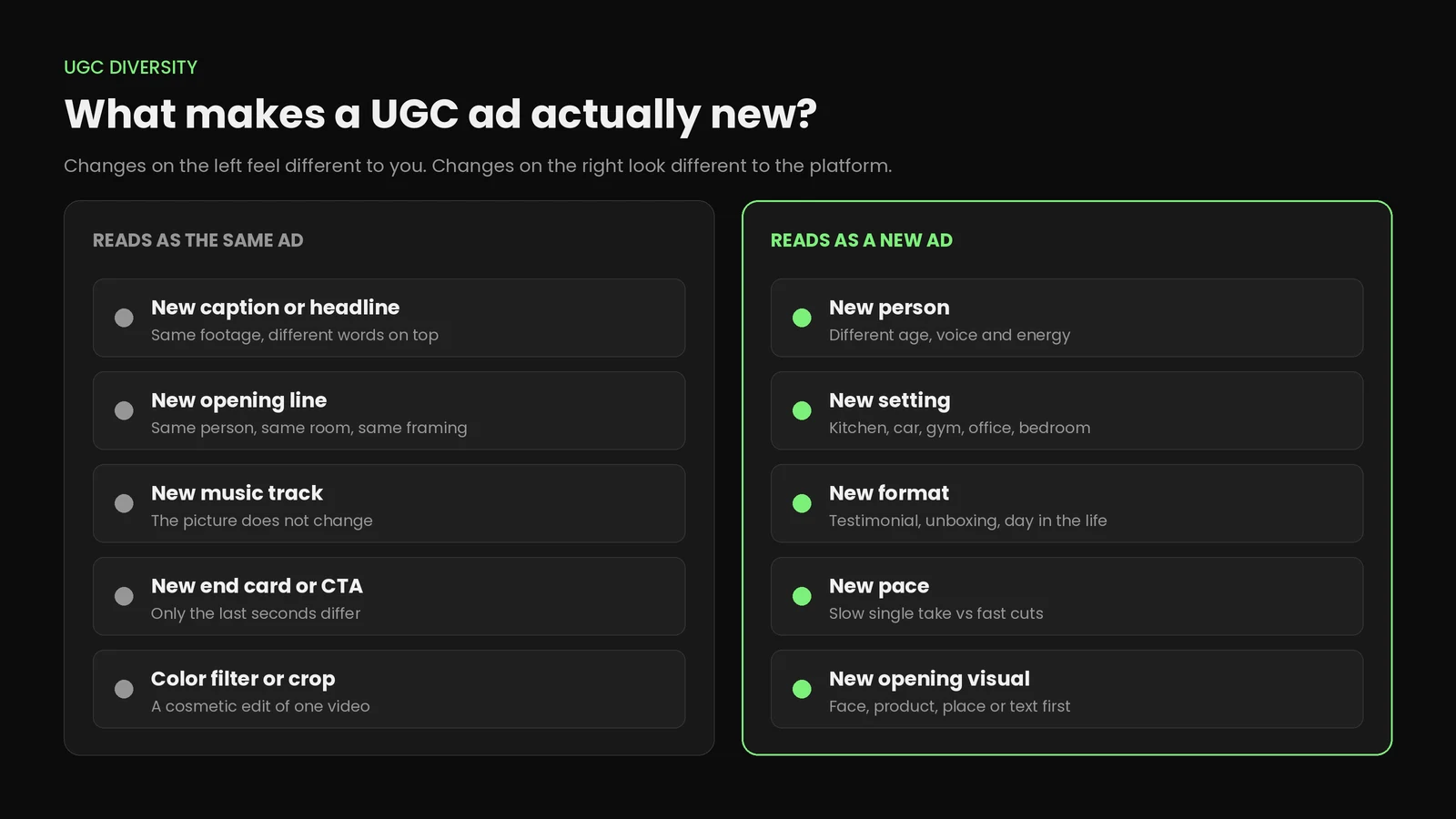
For UGC this matters a lot. Ten testimonials that share the same kind of creator, the same bedroom setting, the same framing and the same "I was skeptical at first" opening are, from the system's point of view, close to one ad with ten captions. They compete with each other instead of reaching new people.
The fix is not more UGC. It is different UGC. We covered the mechanics in More Supplement Ads Won't Fix Your Meta Account. Different Ones Will. The short version for creator content: change the person, the setting, the format and the pace, not just the words.
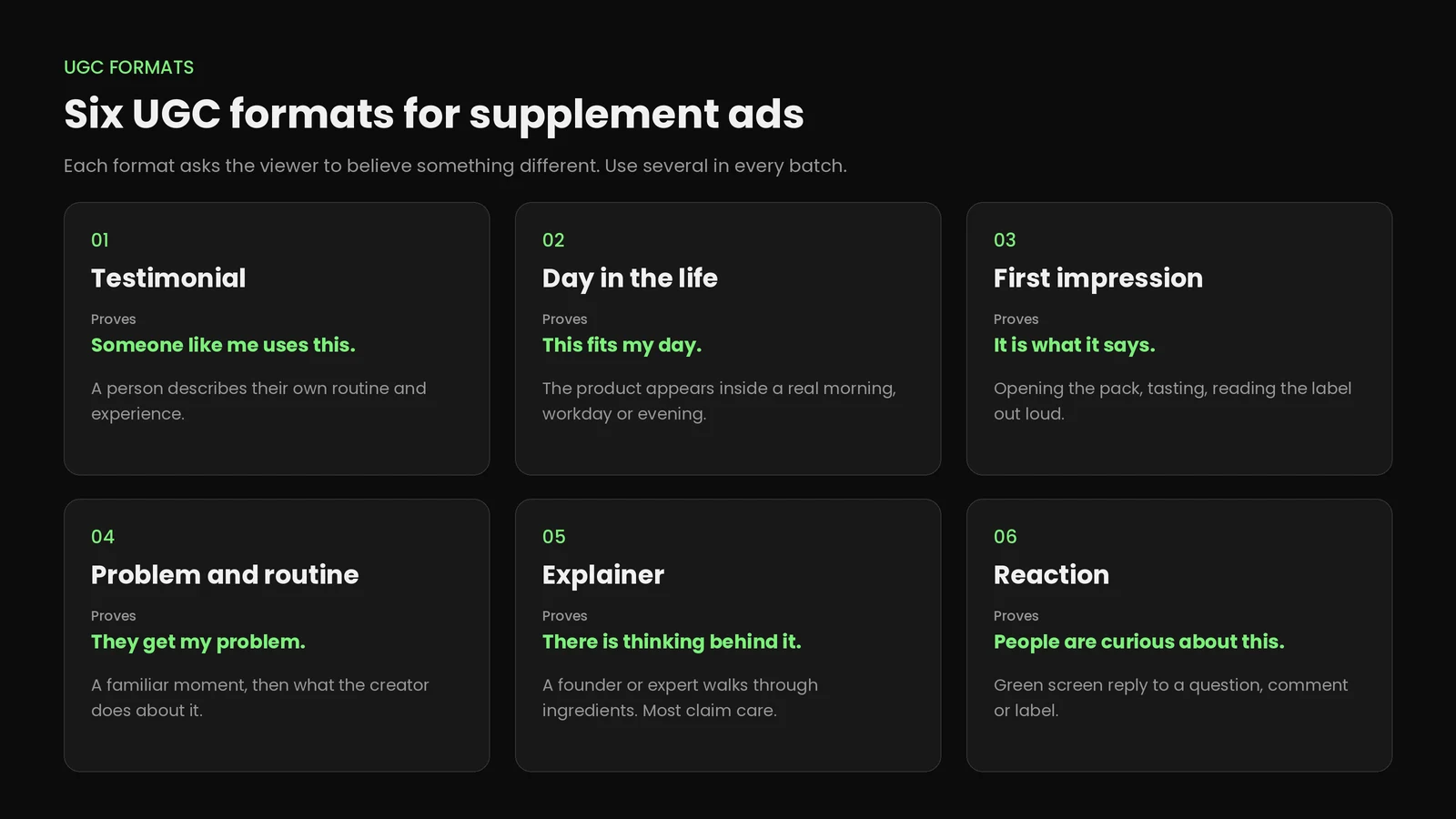
Six UGC formats that suit supplement brands
Each format asks the viewer to believe something different. A good UGC batch uses several of them.
- Testimonial. A person describes their experience with the routine. It proves someone like me uses this. Keep it to experience, not outcomes the brand cannot support.
- Day in the life. The product appears inside a real routine: morning kitchen, gym bag, desk drawer, bedside table. It proves this fits my day.
- First impression or unboxing. Opening the pack, tasting the gummy, reading the label out loud. It proves the product is what it says.
- Problem and routine. The creator names a familiar moment (the 3 p.m. slump, the restless evening, the post-run recovery) and shows what they do about it. It proves they understand my problem.
- Explainer. A founder, formulator or knowledgeable creator walks through the ingredients and why they chose them. It proves there is thinking behind the product. Claims here need the most care.
- Reaction or green screen. The creator reacts to a question, a comment or an ingredient list shown behind them. It proves people are curious about this, and it is a fast way to answer objections.
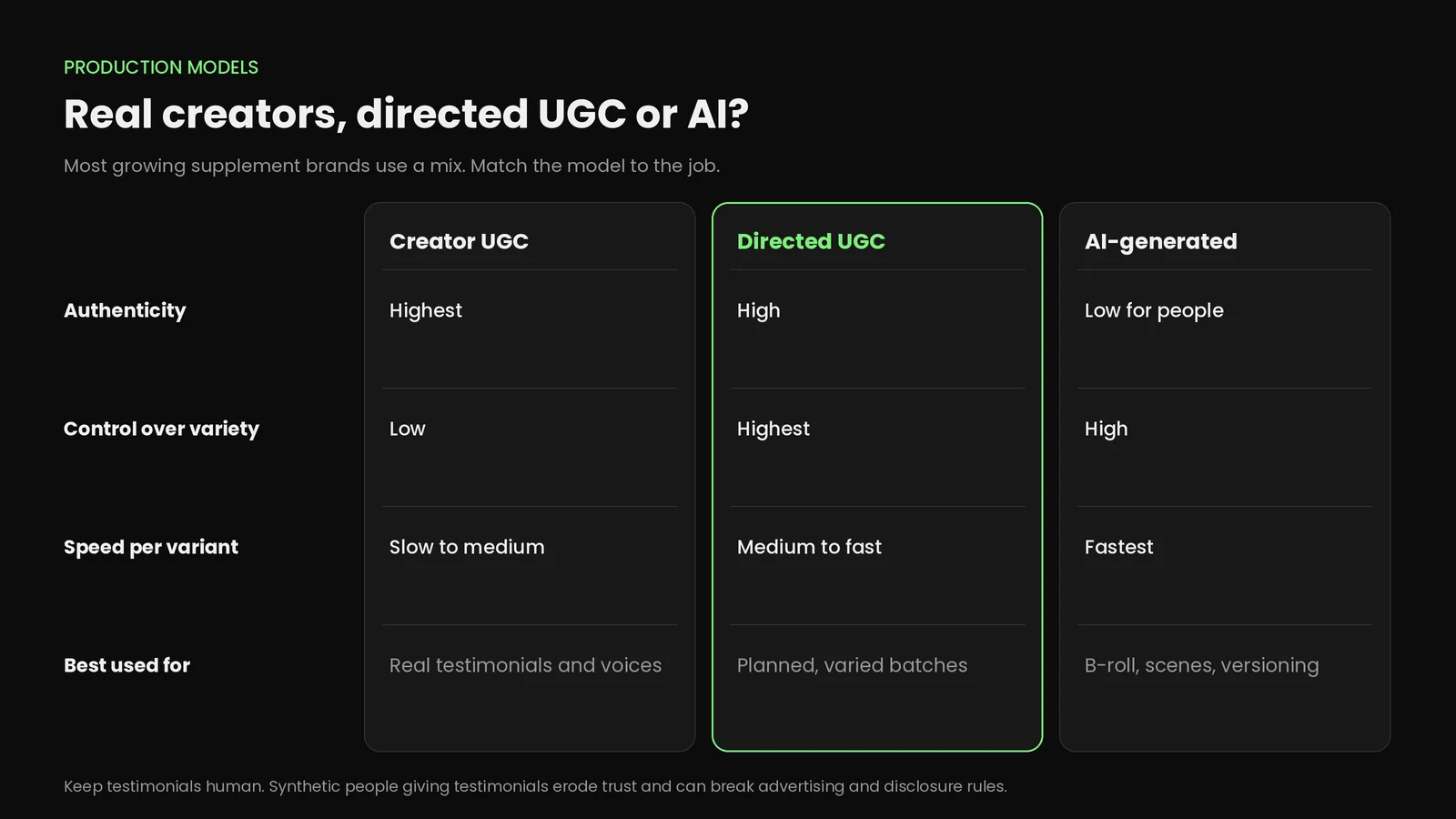
Real creators, directed UGC or AI: choosing a production model
There are three ways to get creator-style ads made, and most growing brands end up using a mix.
Creator marketplaces and direct creator deals are the most authentic and the least controlled. You get real voices and real homes. You also get variable quality, slower turnaround, and a lot of content that looks alike because creators copy what already works on the platform.
Directed UGC keeps the native look but plans it. You choose the people, the settings, the formats and the pacing on purpose, which is the easiest way to guarantee a genuinely varied batch. This is where hybrid production fits: a human creative director plans the batch and AI tools speed up editing, versioning and resizing. We explain that model in Why Supplement Brands Are Switching to Hybrid AI Video Production.
AI-generated UGC, meaning synthetic presenters and fully generated scenes, is the fastest and cheapest per variant. It is also the riskiest for supplements. A synthetic person giving a testimonial about a product they never took is a problem in most markets, and disclosure rules for AI content are tightening. In the EU, the AI Act transparency obligations that became binding in August 2026 require disclosure of AI-generated content that resembles real people. Use AI for scenes, b-roll, product shots, backgrounds and versioning. Keep testimonials human.
How to brief a UGC creator
Most weak UGC starts with a weak brief. "Film an honest review of our magnesium" gets you the same video every other brand received that week. A useful brief is short, but specific on seven things:
- The audience. One person, described in a sentence. "A woman in her 50s who has tried three sleep products and trusts none of them."
- The format. Pick one of the six above. Do not ask for "a mix".
- The setting. Name the room and the time of day. Different creators in different settings is the cheapest diversity you can buy.
- The opening. What is on screen and said in the first two seconds. Give two or three options, and make them visually different, not just different lines.
- The one message. The single thing the viewer should remember. Everything else is cut.
- The approved language. Claims, phrases and words the creator can and cannot use, supplied by the brand. Creators will improvise; give them safe words to improvise with.
- The deliverables. Length, aspect ratio (9:16 first), number of takes, raw files, and whether you need a hook-only pickup.
Ask for pace in the brief too. A slow, single-take version and a fast, cut-heavy version of the same script are two structurally different ads from one session.
Building a varied UGC batch
Think of a batch as a grid, not a list. Pick the dimensions that make ads genuinely different and make sure each ad changes at least two of them:
- Person: age, gender, voice, energy.
- Setting: bedroom, kitchen, car, office, gym, outdoors.
- Format: testimonial, day in the life, unboxing, problem and routine, explainer, reaction.
- Pace: slow build or high energy.
- Opening visual: face to camera, product in hand, environment first, text-led.
A batch of eight to twelve ads built this way gives the platform real options. Then add cheaper variations (hooks, captions, end cards) only on top of the ads that win. For how to structure the test itself, see The Complete Guide to Creative Testing for Supplement Brands.

Platform notes
Meta. Run varied UGC together in the same ad set and let delivery sort it, then check the Creative diversity column. Use partnership ads when a creator has a real audience; the post comes from their handle, which adds trust. Build 9:16 first, with safe zones clear of the caption and button area.
TikTok. UGC is the native language here, so the bar for feeling real is higher. Faster openings, trending but licensed sound, and creator delivery that sounds like talking, not reading. Supplement ads on TikTok can need pre-approval, so plan documents before you plan launch dates.
YouTube Shorts. Similar to TikTok in format, but viewers skew toward explanation. Explainer and problem-and-routine formats tend to fit best.
Amazon Sponsored Brand Video. The shopper is already searching. UGC here should show the product clearly and fast, with the benefit visible without sound. A pure talking head rarely works. See Amazon Sponsored Brand Video: Why Your Meta and TikTok Creative Won't Work Here.
Testing and reading UGC results
Read creator ads at two levels.
First, the batch. Which formats, settings and types of person win? These are the lessons that carry into your next brief.
Second, the ad. Look at the early metrics that tell you which part of the ad is working: how many people watch past the first seconds (the opening), how long they stay (the body), and how many click and buy (the offer and the landing page). A creator with a strong opening and a weak finish is a re-edit, not a failure.
Refresh on a schedule. Narrow supplement audiences see the same faces often, and fatigue arrives faster than most teams plan for. We cover the warning signs in Creative Fatigue Is Costing You More Than You Think.
Claims, disclosure and rights
UGC feels casual, but it is still advertising, and supplement advertising is closely watched. Three things belong in every UGC workflow, and all three are the brand's responsibility:
- Claims. Creators should only say what the brand can support. Give them approved language in the brief and review every script and edit before it runs. Have your regulatory or legal team check claims for each market.
- Disclosure. Paid creators must disclose the relationship where the rules require it, and AI-generated people or scenes may need labeling depending on the market and platform.
- Rights. Get written usage rights that cover paid ads, the platforms, the markets and the time period you plan to run. Organic UGC you find online is not yours to run as an ad until the person agrees.
Common mistakes
- Ordering volume, not variety. Ten similar testimonials are close to one ad.
- Briefing the script, not the shot. The words change easily. The person, the room and the framing are what make an ad new.
- Letting every creator open with the same line. "I was skeptical at first" is on half the supplement ads in the feed.
- Over-polishing. Ring lights, perfect delivery and studio color grading push UGC back into "ad" territory.
- Using synthetic people for testimonials. It damages trust and can break advertising rules.
- Skipping approved language. Creators improvise, and improvised claims are where supplement ads get rejected.
- Judging a creator on one ad. Test the format and the person across two or three edits before dropping them.
- Missing usage rights. A winning ad you cannot legally scale is not a win.
FAQ
How many UGC ads should a supplement brand test at once?
Enough to cover real differences, not more. A batch of eight to twelve ads that vary person, setting, format and pace gives Meta and TikTok genuine options. Add hook and caption variations later, on top of the winners.
Is AI-generated UGC worth using for supplements?
Use AI for what it does well: backgrounds, product shots, b-roll, resizing and versioning. Avoid synthetic presenters giving testimonials. They erode trust, and disclosure rules for AI content that resembles real people are tightening, including in the EU since August 2026.
Do UGC ads need to look low quality to work?
No. They need to look native. Clear audio, steady framing and good natural light are fine. What breaks the effect is studio polish: perfect lighting, scripted delivery and heavy branding.
What does Meta's Creative diversity rating mean for UGC?
It is an estimate, shown in Ads Manager, of how varied the ads in an ad set are. UGC batches with similar creators and settings often rate Low. Treat it as a prompt to change people, settings and formats, not as a score to chase on its own.
Should we use a UGC platform or a production partner?
It depends on what you need more: volume of real voices or control over variety. Many brands use both: creator platforms for raw testimonials, and a production partner to plan the batch, direct key shoots and edit everything into a varied, platform-ready set.
Work with Design4Studio
We produce creator-style video ads for supplement and wellness brands, planned as varied batches and built for Meta, TikTok, YouTube and Amazon, with an 3 to 10 day turnaround. Human-directed, AI-accelerated.
If your UGC is starting to look the same, book a call and we will map out your next batch.
Ready to build a more varied UGC batch?
Creator-style video ads for supplement and wellness brands, planned with purpose.
See related work in our portfolio, or explore more guidelines.
Get 10 free static ads